 Post by
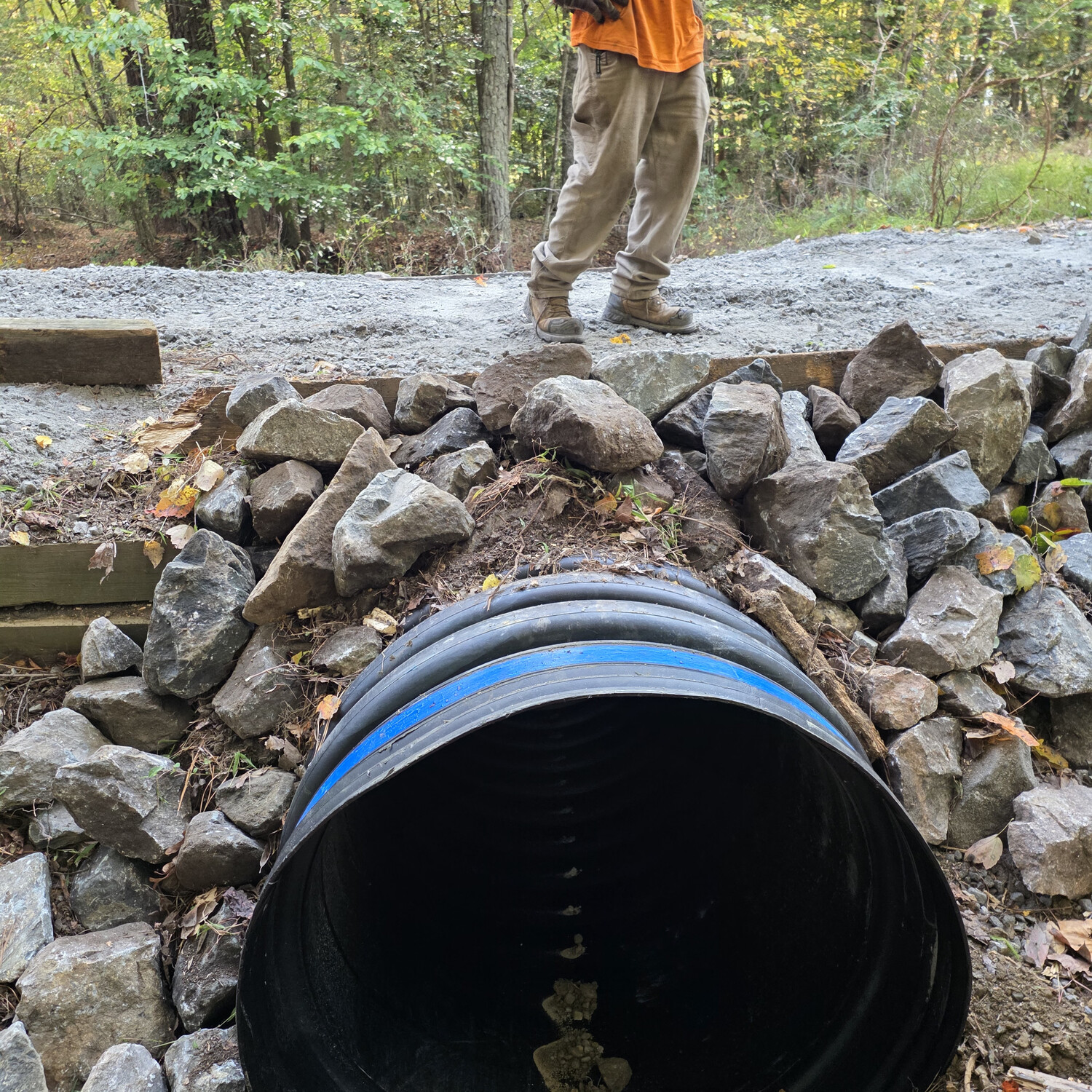
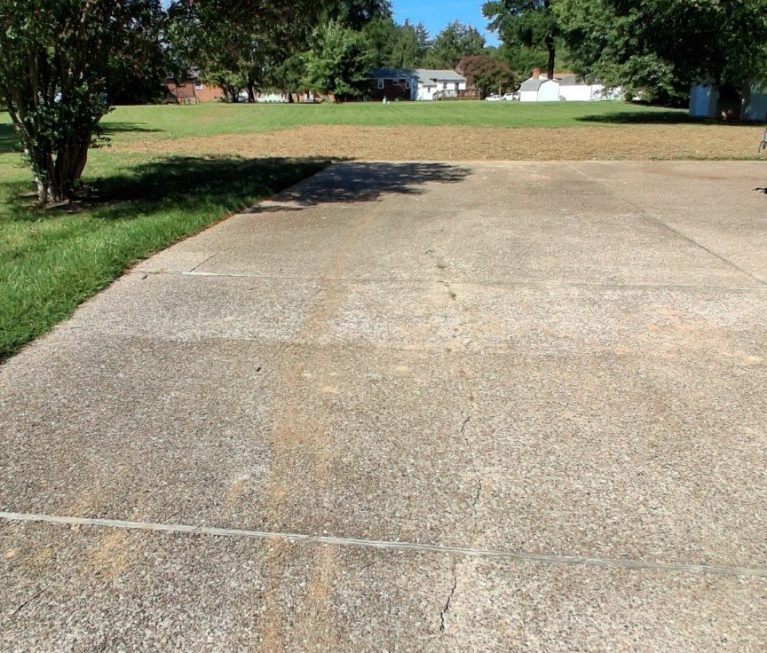
If water runs over your driveway after a storm or the gravel keeps washing out in the same spot, start by looking at the ditch on both sides of the crossing. A driveway culvert carries runoff under the entrance so water can continue down the ditch. A blocked pipe, a damaged pipe or a ditch that has filled with sediment can all cause similar problems at the surface.
Start with who maintains the road. For a driveway entrance on a VDOT-maintained road, check with VDOT before replacing a roadside pipe or building a new entrance. For a crossing on your property, send photos of both ditch ends, the existing pipe if visible, and any washout so we can review the driveway repair and drainage work together.
When a driveway culvert needs replacing
If the pipe is sound and leaves or sediment are blocking the opening, clearing the obstruction may restore flow. A crushed pipe, a separated joint or a dip in the driveway above the crossing calls for a closer look. When the same entrance washes out repeatedly, check whether water can get into the pipe, whether the pipe can handle the runoff and whether water has a clear path out the other end.
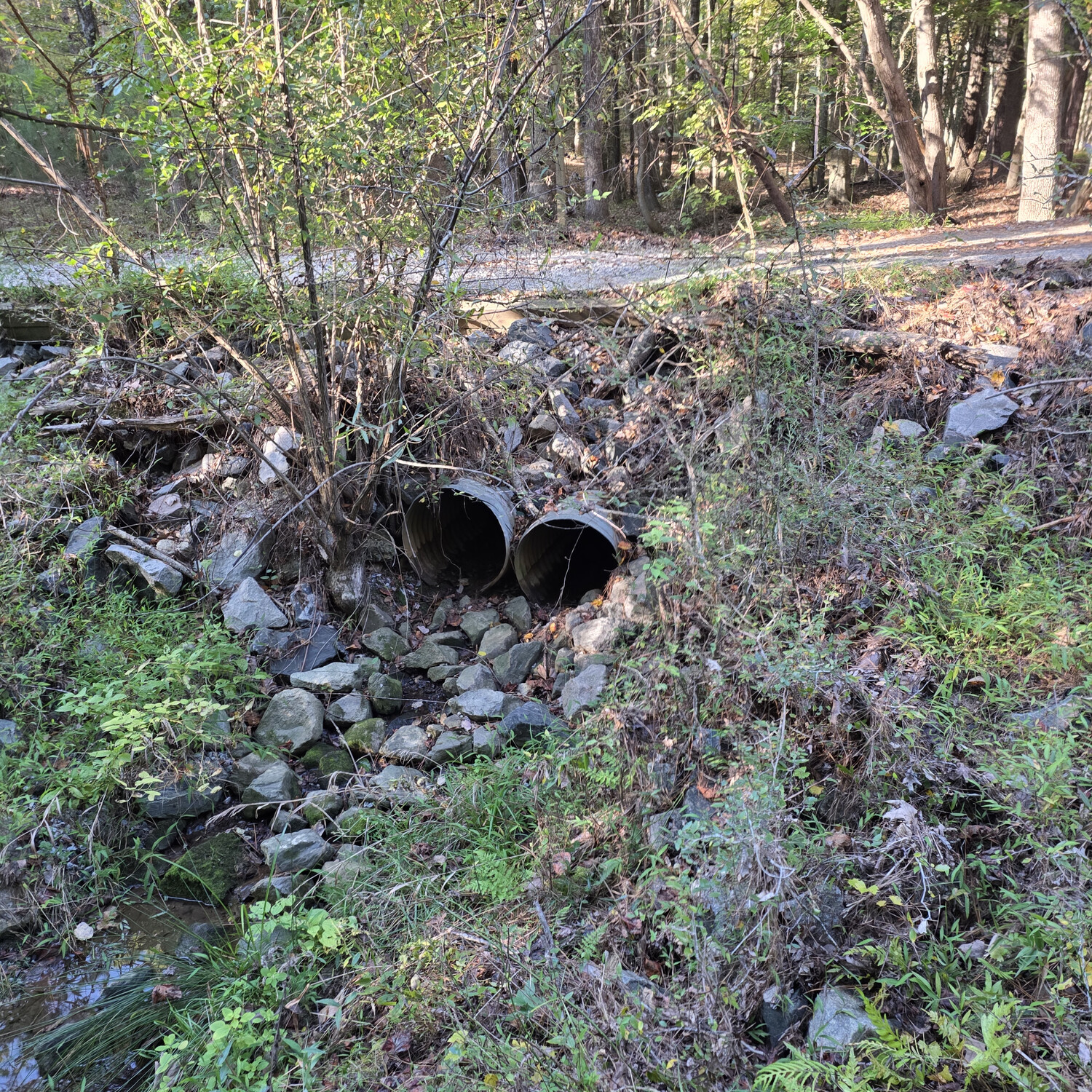
If the problem is at a roadside ditch along a VDOT-maintained highway, contact VDOT before hiring someone to clean or replace the pipe. Virginia’s private entrance rules assign VDOT responsibility for cleaning those entrance pipes. VDOT may also replace a pipe when needed to protect the highway and the traveling public. Virginia private entrance rules.
Permits for a new driveway entrance
Start by finding out who maintains the road. A new private entrance in a VDOT right-of-way requires an entrance permit. VDOT reviews the site, determines whether a culvert is needed and specifies the pipe size and type on the permit when one is required. If your city or county maintains the road, ask its public works department about driveway and right-of-way approvals. VDOT land use permits.
If the crossing would disturb a stream or wetland, check with Virginia DEQ before starting. Separate water permits may apply even when the crossing is entirely on private property. Virginia DEQ wetlands and streams guidance.
Choosing pipe size and cover
Pipe size depends on how much land drains to the crossing, the expected runoff and the ditch and outlet elevations. If the old pipe regularly overflowed, check the required capacity before ordering a replacement. If a road authority has issued a permit, use the approved pipe size, material and installation details.
Cover is the depth of material above the top of the pipe. The required cover depends on the pipe and its installation detail, including the type of backfill, how it is compacted and what will drive over it. If dump trucks or delivery trucks will use the entrance during construction, include those loads when planning the crossing.
Which culvert pipe is best for your driveway
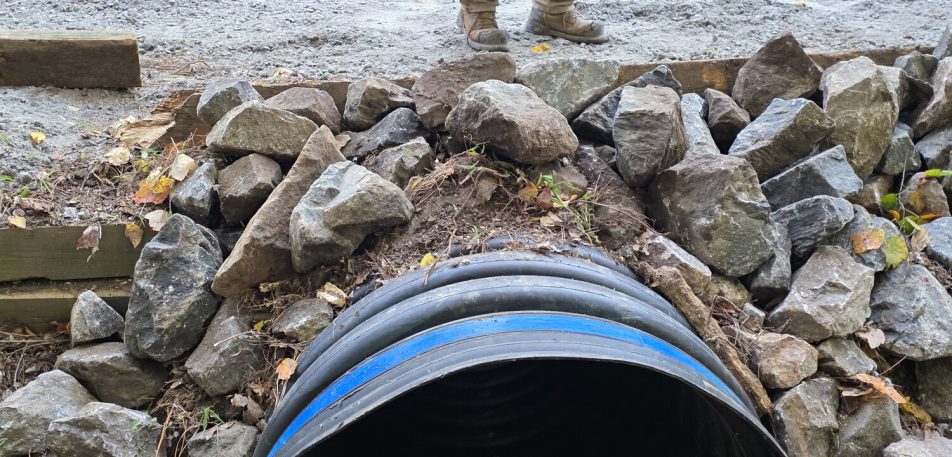
Double-wall plastic (HDPE). For a typical residential driveway, we start by looking at double-wall HDPE when the permit allows it and the site has enough cover. High-density polyethylene is lightweight and resists corrosion. Its smooth inner wall reduces flow resistance. It relies on well-compacted backfill along both sides to hold its shape under traffic. When VDOT allows polyethylene at an entrance, its specification calls for AASHTO M 294 Type S, which pairs that smooth inner wall with a ribbed outer wall. See VDOT’s pipe specifications.
Light-duty plastic drainpipe. Lightweight single-wall or perforated pipe is easy to handle and useful for yard drainage. Perforated pipe lets groundwater enter a French drain, while a driveway culvert carries ditch runoff through a nonperforated pipe. A driveway crossing needs a pipe rated for the traffic loads and allowed by the road authority where a permit applies.
Corrugated metal pipe. Coated corrugated steel is worth comparing for a farm entrance or private access road where the site conditions suit it. Metal is easier to handle than concrete, and a low-profile pipe arch may fit a shallow ditch where a round pipe is too tall. Steel can corrode, and sediment and gravel carried by runoff can wear it down. The coating and wall thickness matter, and an unlined corrugated interior adds flow resistance. See VDOT’s pipe selection guidance.
Reinforced concrete pipe (RCP). For a commercial entrance or a driveway that regularly carries loaded trucks, we compare reinforced concrete in a strength class suited to those loads. It’s rigid and durable, and its weight makes it less likely to float in high water. That weight also makes the pipe harder to haul and set. It still needs proper bedding and support at the joints. See Virginia DCR’s culvert material comparison.
If the permit or plans give you a choice, compare the full installed cost, including delivery, bedding, backfill and driveway restoration. For a replacement, check why the old pipe failed before ordering the same size or material.
What goes into a culvert installation
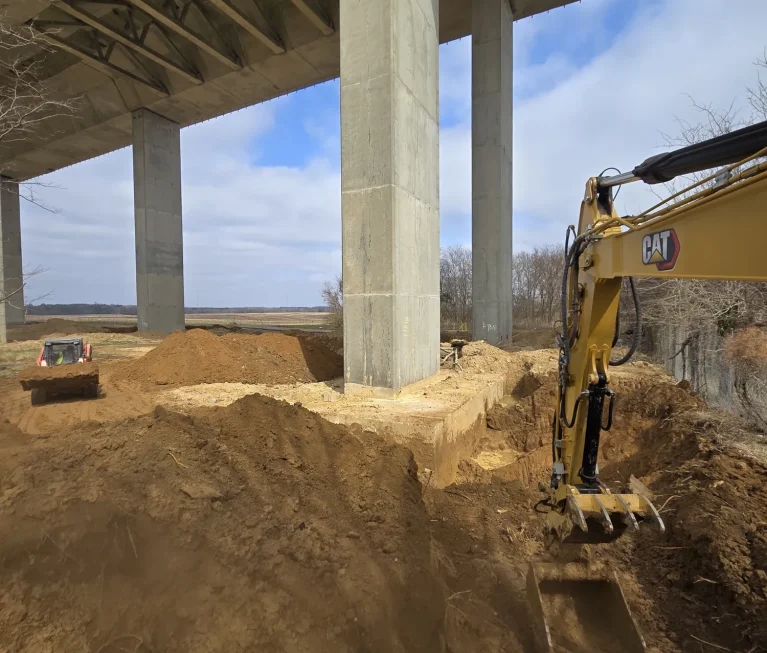
The work can include excavating the crossing, removing an old pipe, preparing the bedding under the new pipe, and placing and compacting the backfill. The pipe has to line up with the ditch so runoff can enter and leave the crossing. Where the outlet needs erosion protection, the scope may include rock or other stabilization. The last step is restoring the driveway surface and the disturbed ground around it.
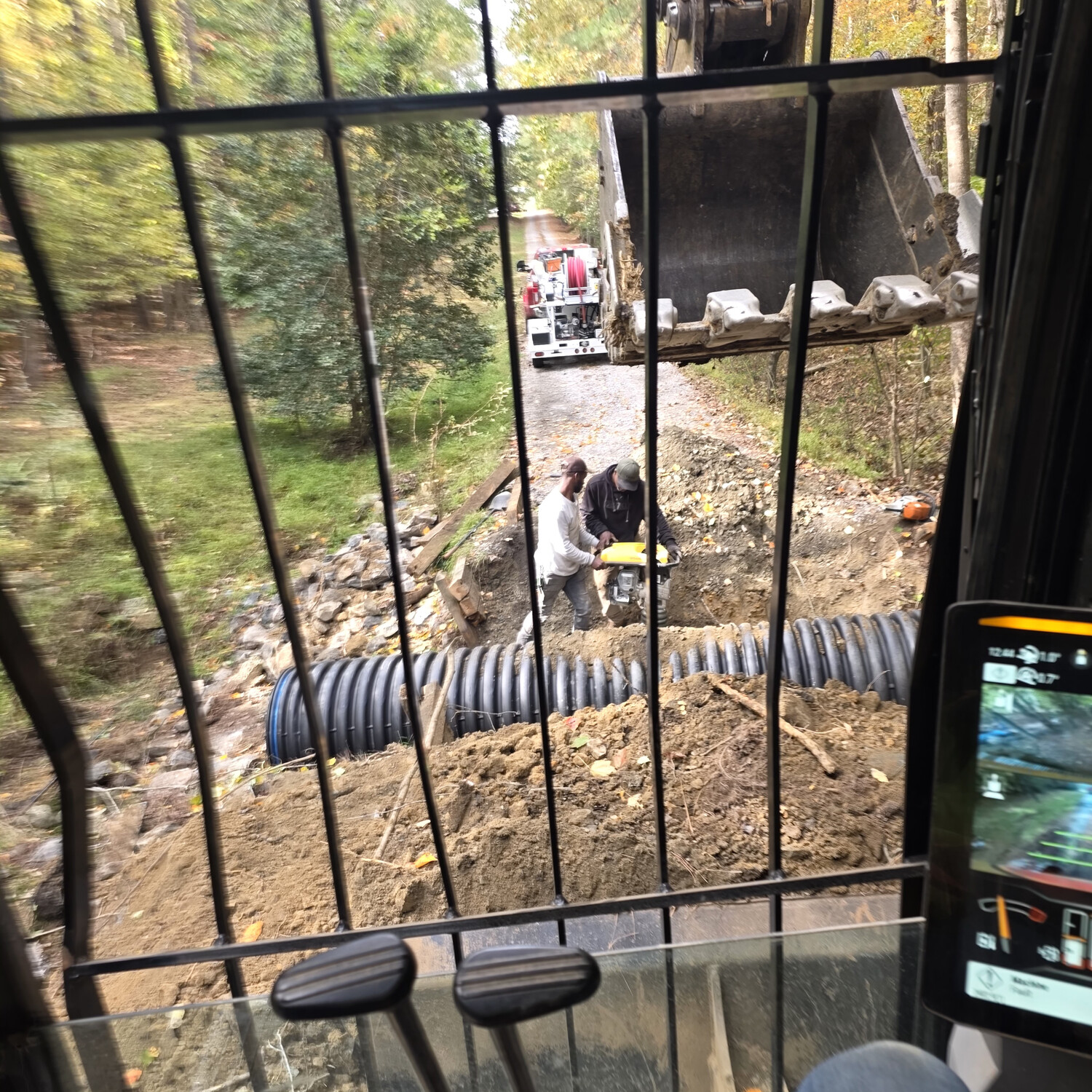
Before digging, the excavating contractor must contact Virginia 811 and review the marking responses. Arrange to have privately owned lines located separately.
What affects the cost of a driveway culvert
Pipe diameter and length affect the price, along with excavation depth, access for equipment, old pipe removal and disposal, and the amount of stone and backfill needed. A quote may also include ditch grading, outlet protection and driveway restoration. If you’re comparing estimates, check which of those items each contractor has included.
Request a culvert installation or replacement quote
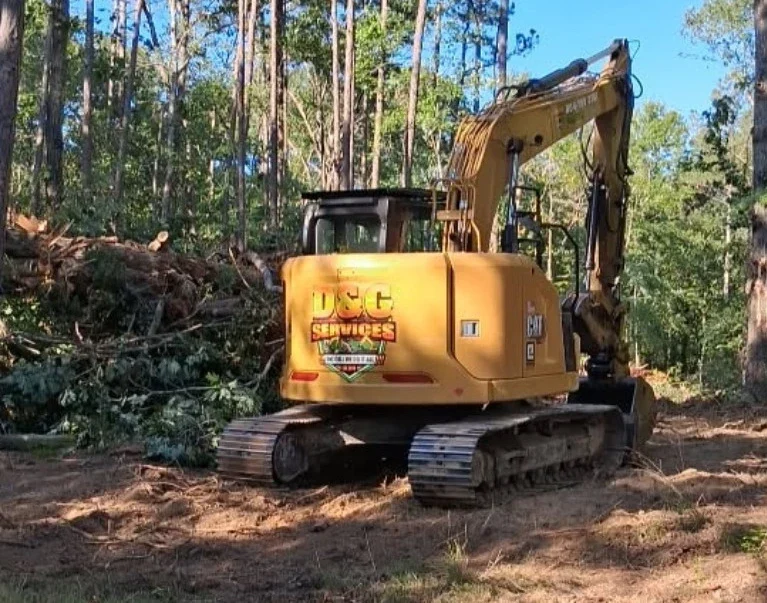
D&G Multi Services LLC installs driveway culverts and handles related drainage and grading work around Richmond, Chesterfield, Prince George and Dinwiddie. Send us the property address, photos of the driveway and both sides of the ditch, and any permit or pipe specifications you already have. Tell us if you’re building a new entrance or dealing with ponding, overflow or a washout. Request a quote or call 804-799-8761 to discuss the project.