
D & G Multi Services LLC
Excavation, Grading & Land Clearing in Dinwiddie, VA
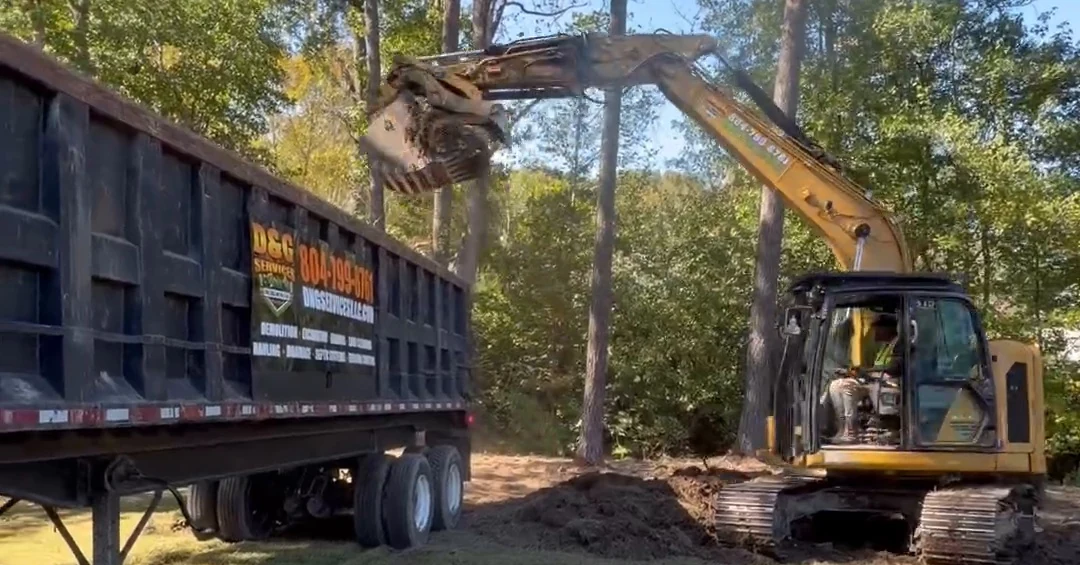
D & G Multi Services LLC offers excavation, grading, demolition, hauling, land clearing and drainage for projects in Dinwiddie. Clearing a work area, opening access or improving a driveway may also involve stump removal, soil movement, culverts and restoration. We can review those tasks together, with clear boundaries for what is removed, what remains and the surface you want when the work is complete.
D & G Multi Services LLC holds Virginia Class A contractor license 2705174415 with Residential Building (RBC), Highway / Heavy (H/H) and Alternative Sewage Disposal System (ADS) specialties. Owner David Gainyard holds a Master Alternative Onsite Sewage System Installer license. From our South Chesterfield / Colonial Heights base, we review exact addresses, equipment access and mobilization within a primary 50-mile road service area.
Project example: clearing, grading and seeding in Sutherland
A D & G Multi Services project in Sutherland, Virginia, included clearing and grading a property, followed by seeding and straw application using a straw blower.
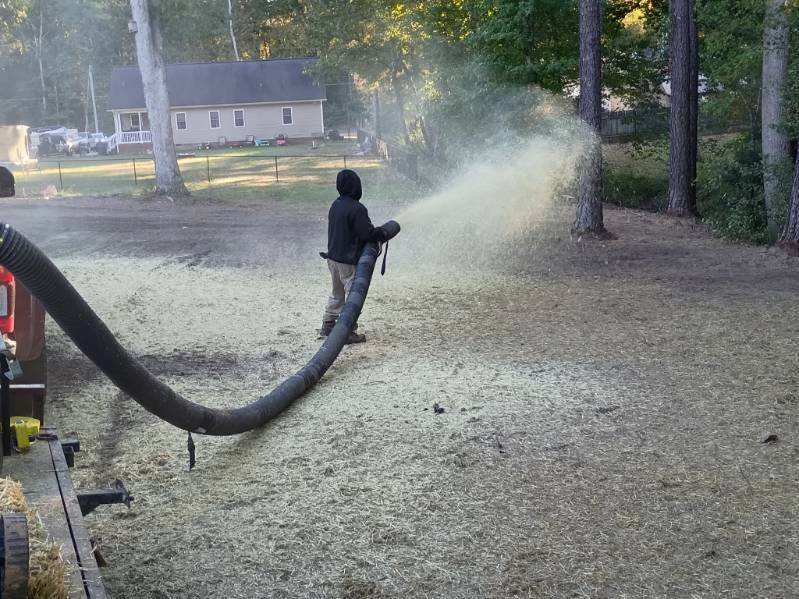
That sequence connects removal and earthwork with the finish requested for the disturbed ground. For similar work, identify the clearing boundary, the intended use after grading and the areas that should receive seed and straw. The estimate should distinguish the preparation, grading and surface treatment included.
Land clearing, stump removal and site preparation
A land clearing request should identify more than the total property size. Mark the proposed work limits, trees or features to retain, stump-removal areas and any existing structures or utilities. Clearing an access route, preparing a building area and opening a larger usable space can require different scopes.
Photos and a marked sketch help distinguish clearing from excavation, grading and restoration. For site preparation, describe the intended use after clearing and the condition needed by the next contractor. A building footprint, work pad or temporary access route needs a defined handoff rather than a general promise to make the whole property ready.
Driveway installation, equipment access and culverts
Equipment access and material deliveries need consideration before the work sequence is set. Tell us about entrance width, gates, overhead restrictions, existing driveway condition and places available for unloading. Include any limitations on where trucks or equipment may travel.
For driveway installation or improvement, provide the proposed route, approximate dimensions and available plans. Culvert locations, drainage crossings and the intended driveway surface need review. An estimate should make clear whether it includes earthwork, material supply, installation and restoration along the route.
Demolition, debris removal and material hauling
Clearing and excavation may produce vegetation, stumps, soil or other material. Identify whether suitable material may be retained in an agreed location or whether removal is requested. Onsite placement needs site and scope review; it should not be assumed appropriate for every material or property.
If demolition is involved, share the structure type, approximate dimensions, photos and known material concerns. Demolition, hauling and disposal should each be addressed. Hazardous-material assessment or handling must be resolved separately where relevant to the project.
Grading, drainage and restoration after clearing
If the goal includes improving drainage, describe where water collects and what happens after rain. Grading, drainage systems and culverts or erosion control may be part of the requested work, depending on actual conditions. For a designed stormwater management system, provide the plans, proposed water route and installation limits. Construction stabilization and a permanent runoff system need distinct scope items.
Define the finish for disturbed areas: rough grade, finish grade, topsoil, seed and straw, hydroseeding or sod installation. The Sutherland example documents seeding and straw application; it is not a hydroseeding example. For any restoration request, identify installation limits and who provides watering and follow-up care.
If conventional or alternative septic installation or water and sewer work is also planned, provide the relevant documents and identify design, approvals, connections and work assigned to others. Keep those responsibilities alongside the excavation, backfill and surface-restoration request.
Choose between opening access and finishing a driveway
“Clear an entrance” and “build a finished driveway” describe different results. An access-only request should say where the route begins and ends, what vegetation or stumps need removal, and the condition needed for the next phase. A driveway request also needs a defined surface and decisions about excavation, grading, imported material, placement and drainage.
Consider the work in connected stages. First, identify a route and the features to keep. Then review removal and the ground preparation needed for that route. Material movement, crossings and the intended finish can be defined once the requested access and surface are clear. This is a planning sequence, not a promise that every property needs the same construction steps.
If the project will continue after the first visit
Tell us whether builders, delivery trucks or another contractor will use the route before final finishing. The proposal should distinguish the condition provided at the first handoff from later driveway material or restoration. It should also identify who is responsible for changes or damage during the intervening work. If you need project coordination, list the milestones and trades to be coordinated; identify that coordination role separately from the equipment tasks in the proposal.
For an initial review, a photo looking in from the entrance and another looking back toward the road can help explain the route. Add a marked view of the intended end point and any crossing when you have it. You do not need a completed drawing to begin a residential conversation.
Sitework requests for properties with a Carson address
If your project has a Carson mailing address, send the exact property location when requesting work from D & G Multi Services LLC. We review service coverage, access and mobilization by the job address. The mailing community alone does not define the project scope or establish which jurisdiction applies to the property.
For a clearing and earthwork request, explain how the land will be used and which areas should remain untouched. Mark the proposed access, building or work footprint, and the limits of vegetation removal. A combined scope can distinguish clearing and stump removal from excavation, rough grading, material export and the finished surface required by the next contractor.
We also review hauling, demolition, drainage and culverts, septic installation, utility earthwork and erosion control. When several operations share the same access route, identifying the sequence and material staging helps define the work. Include restoration for disturbed ground where needed, with preparation, seed and straw, hydroseeding or sod specified for the agreed finish.
Send photos of the entrance and work area, the site address, available plans and your proposed timing. Identify who is responsible for design information, approvals, utility coordination and the next trade’s work. Call (804) 799-8761 or request a Carson-area sitework proposal for review of the actual property.
For another project location, see Brunswick County and Alberta, Emporia, Sussex County, Waverly and Stony Creek.
Questions about your Dinwiddie project
Does an acreage clearing request include every tree and stump?
Only the removal limits defined in the proposed scope apply. Mark the area to clear, trees to retain and stump-removal areas. State whether debris removal, grading and restoration are also requested; total acreage alone does not define those tasks.
Can driveway or culvert work be included with clearing?
Yes, it can be reviewed as related work. Provide the route, dimensions if known, access photos and available plans. Identify the requested surface and drainage crossings so the scope can distinguish earthwork, materials, installation and restoration.
Can clearing debris or excavated material stay on the property?
Describe your proposed retention location and intended use. Onsite placement needs a project-specific review. Identify the proposed handling method and destination rather than assuming burning, burial or disposal is included or permitted. Removal and disposal should be stated when requested.
Plan your Dinwiddie clearing or sitework scope
For a Dinwiddie clearing or sitework request, identify the work boundary, trees or improvements to retain, access and the intended use of the cleared ground. Include the exact property address. Photos, plans and measurements are optional for an initial residential request. Call (804) 799-8761 or request an itemized proposal. For commercial bids, include the current plans and bid deadline when available.
Planning work at another Central Virginia property?
Explore our Richmond, Chesterfield and Prince George service-area guides. Send the exact property address so we can review travel, equipment access and project scope.