 Post by
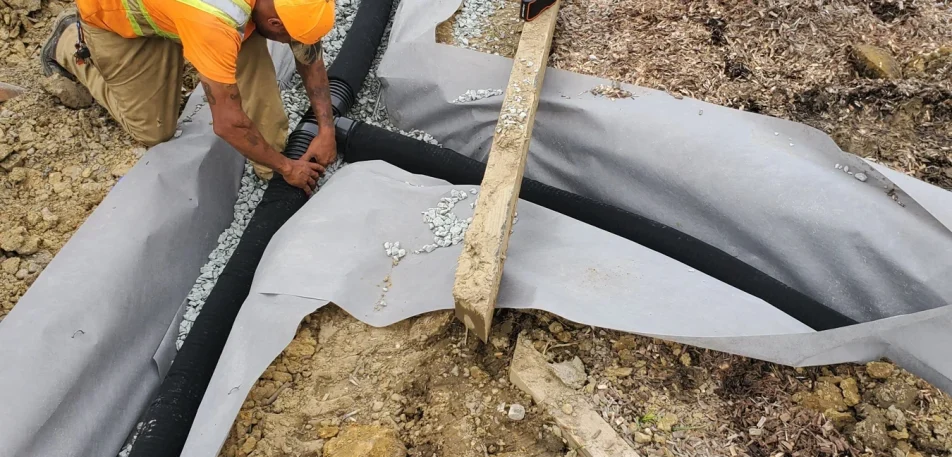
Drainage pipe installation in progress.
If water keeps collecting in your yard, start by finding its source and route before choosing a repair. A low spot that traps surface runoff may need different work from ground that stays wet between storms. For a property in Chesterfield or the surrounding Richmond area, a useful drainage assessment connects the wet area to the buildings, nearby ground and a suitable discharge location.
Record what happens during rain
Take photos from a safe location while water is moving and again after the rain has stopped. Include the surrounding yard rather than photographing only the puddle. A short record can help explain:
- Where water first enters or begins collecting.
- Whether a roof downspout empties into the affected area.
- Which direction water travels across the ground.
- How long the area stays wet and whether it is wet during dry weather.
- Which doors, paths, driveways or landscaped areas are affected.
Persistent wetness can be associated with low ground, poor infiltration, groundwater or a leak. Those possibilities need investigation. Photos help define the question, but they do not replace checking the actual site and elevations.
Understand what each approach does
Regrading changes the shape of the ground. It may help when a depression or an interrupted surface route is holding water. Adding soil without checking surrounding elevations can simply move the collection point, so the proposal should explain the intended water path.
A grass swale is a broad, shallow channel that carries runoff across the surface. Virginia Cooperative Extension describes swales as a way to slow and convey stormwater. Space, vegetation and the connection at the outlet matter. A swale also needs upkeep so obstructions or damaged cover do not undermine its function.
A catch basin collects surface water at an inlet and conveys it through a connected system. Its location must match where water can actually reach it. A basin alone does not establish that the downstream route is suitable.
A subsurface drain may be considered for some below-ground water problems. The term French drain should not substitute for an explanation of the water being intercepted and where it will go. Some properties need a combination of surface grading and drainage work.
Check the discharge route
Ask the contractor to identify the proposed outlet before agreeing on a pipe route or grading plan. Discuss neighboring property, existing drainage features, easements and any approvals that may affect the work. A repair should be evaluated for the whole flow path, including what happens beyond the wet spot.
Before excavation, arrange the appropriate utility locating process and check for private lines. Virginia 811 explains that private facilities may require a separate locator. Tell the contractor about irrigation, outdoor lighting, buried drains and other known installations.
Ask for a complete repair scope
A useful written proposal identifies the area to be changed, the intended water route, and the final surface. Ask how it handles soil removal, imported material, pipe or inlet work, disposal and restoration. Identify fences, paving or landscaping that may need removal and replacement for access.
Also ask what maintenance the finished system needs and which conditions could require further investigation. Avoid comparing two prices until you understand whether both proposals include the same restoration and discharge work.
For a grading or drainage inquiry, send D & G Multi Services the property address, photos and a description of when the problem occurs. Call (804) 799-8761 or request a project review. Learn about our drainage solutions and grading services.
Technical background
Northern Virginia Soil and Water Conservation District wet yard guidance, Virginia Cooperative Extension grass swales, and Virginia 811 excavator questions. These explain general concepts; a site-specific assessment determines the work.