 Post by
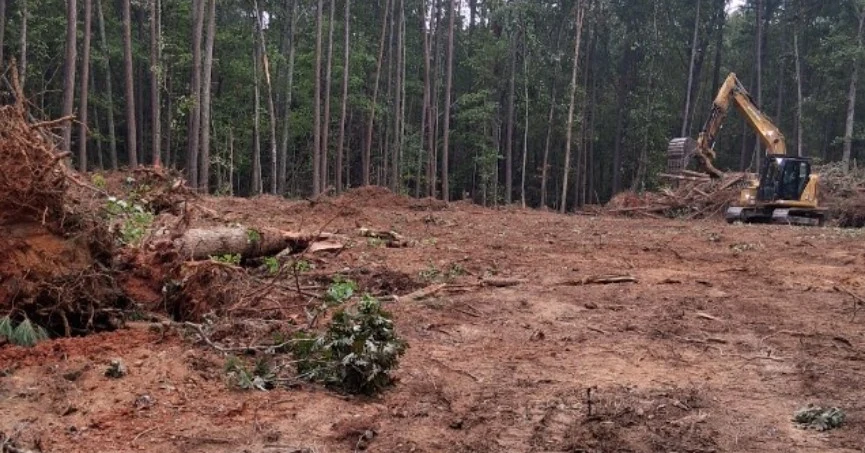
Clearing work with removed roots, logs and brush.
A wooded lot can look open after the trees and brush are removed while still needing substantial preparation for construction. Before requesting a land-clearing price in Central Virginia, decide what the next stage of the project requires. A lawn, building pad, access road, and undeveloped area may need different treatments.
One of the most useful questions to ask is whether the scope includes clearing, grubbing, or both. Those words should be explained in the proposal rather than left to assumption.
What clearing and grubbing mean
In practical scope discussions, clearing usually addresses trees, brush, and other vegetation above the ground. Grubbing addresses stumps, roots, and root mat below or at the surface. The exact removal limits and treatment depend on the plans and intended use.
The proposal should also explain what happens to the material. Cutting vegetation, processing it, loading it, hauling it away, and paying disposal charges are separate activities to confirm. Ask whether any approved material will remain onsite and where it may be placed.
Why the next construction stage matters
Removing visible vegetation does not establish that soil is ready to support fill, a driveway, or a foundation. FHWA guidance explains that organic surface soils can contribute to settlement and can lose strength when wet. Its construction guidance also calls for checking the prepared surface and addressing unsuitable material before subsequent work.
That does not mean every project needs the same removal depth or treatment. The appropriate preparation must match the site conditions, plans, and professional recommendations that apply to the work.
For an area that will receive structural fill or construction, ask how stumps, root material, holes, soft areas, and disturbed ground will be handled. For areas outside those limits, ask what vegetation should remain and how it will be protected.
Mark what should stay before equipment arrives
Give the contractor a clear boundary for the proposed work. Identify property lines, trees to preserve, fences, existing drainage paths, access points, and known utilities. Distinguish the building area from temporary access and material-storage areas.
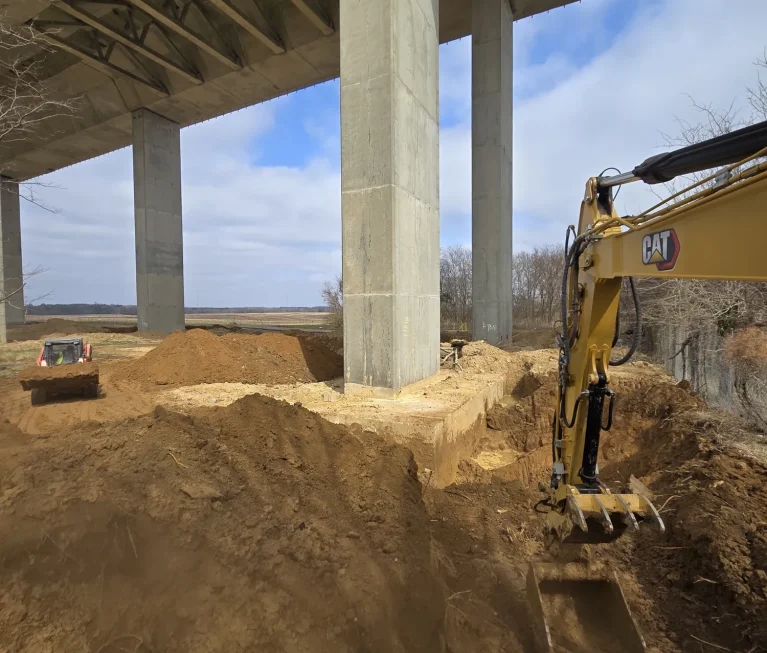
Utility planning belongs before excavation. Virginia 811 explains that public utility operators respond to locate requests, while privately owned lines may need separate locating arrangements. Examples can include irrigation, power to an outbuilding, or other owner-installed services. Discuss those features even if they are outside the main building footprint.
Ask for a complete finishing scope
A clearing proposal should explain how the property will be left. Ask these questions before accepting a price:
- Are stumps and root mat included within the required limits?
- Will debris be removed, processed, or retained in an approved location?
- How will stump holes and other disturbed areas be treated?
- Is grading included, and what finished elevations or condition are expected?
- Who handles erosion controls, stabilization, and restoration?
- What work must be completed by others before construction can begin?
Avoid treating phrases such as “rough grade” or “construction ready” as complete specifications. Ask what each phrase means for your project and what evidence or inspection establishes acceptance.
Request a price for the result you need
Provide the address, planned use, drawings or a marked clearing area, access information, and the required final condition. Ask the contractor to identify exclusions and unresolved conditions. This makes it easier to compare proposals without mistaking a basic clearing price for a complete site-preparation package.
To discuss a lot or construction project, contact D & G Multi Services with your plans and scope questions. Review our land clearing services for the work you want included in the request.
Technical background
FHWA Geotechnical Aspects of Pavements, Chapter 8 and Virginia 811 Excavator FAQ. Highway construction guidance is technical background; project-specific requirements must be established separately.