 Post by
If you’re building on a wooded lot in Richmond, Henrico, or a nearby county, get the septic layout before the first tree comes down. The house pad and driveway may need full clearing and stump removal, while the future drainfield on the same lot may need a much lighter approach. The septic design tells you what soil to protect. The land-disturbance plan tells you how much ground the project can disturb and what approvals you need before work starts.
How we clear a lot with a conventional septic system
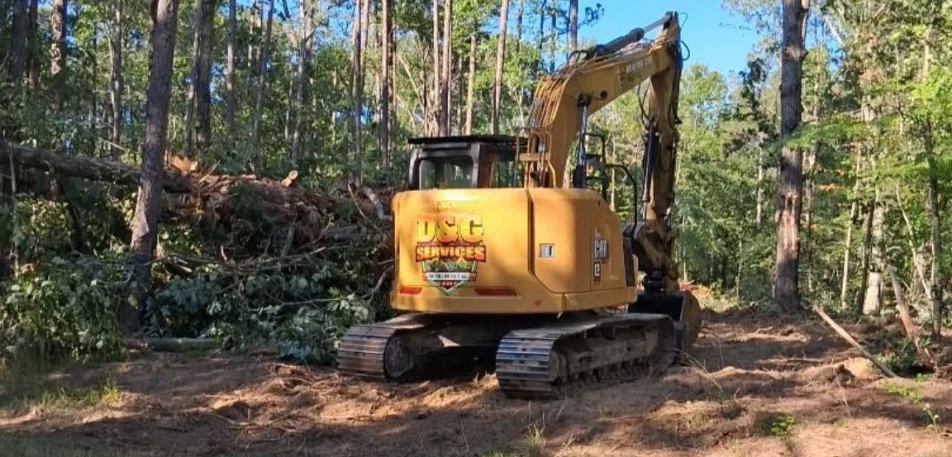
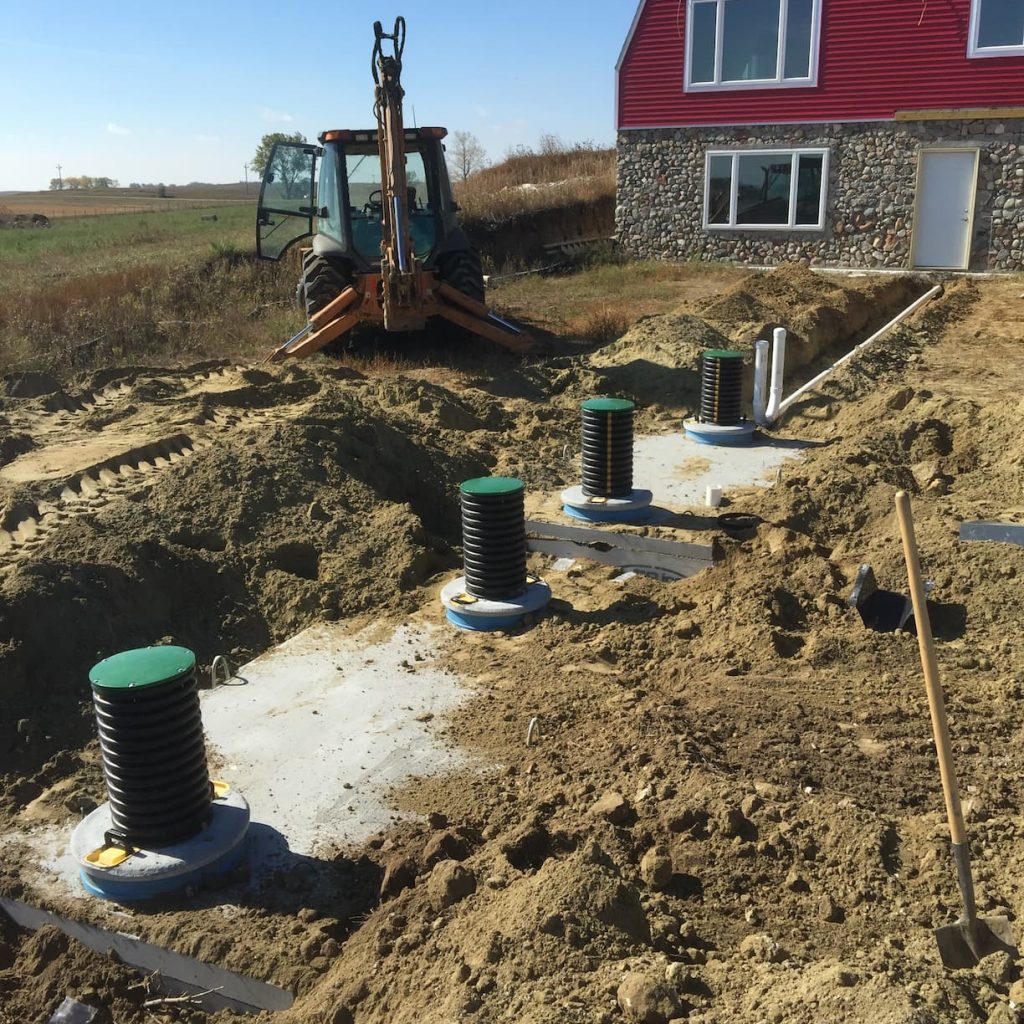
On a conventional septic lot, we can often use an excavator to clear and grub areas approved for machine work, such as the house pad and driveway. Grubbing means pulling stumps and roots. At the proposed drainfield, we follow the approved septic plan and the designer’s site-preparation instructions. Even a conventional drainfield can depend on undisturbed soil. Mark the primary drainfield and any reserve area before clearing. Keep equipment, logs, and soil stockpiles out of those areas unless the approved instructions specifically allow the activity. Virginia septic site-preparation rules · Virginia rules for in-ground systems
How we clear for a shallow alternative septic system
Some shallow alternative drainfields rely on the soil close to the surface. Where the septic designer calls for it, we saw-cut the trees and leave the stumps and roots in place during initial clearing. Pulling a stump with an excavator can tear up the soil the system needs. The designer and installer should agree on which stumps need further work, the approved grinding depth and equipment, and when that work can happen. Other alternative designs can have different site-preparation requirements. Virginia rules for shallow-placed systems
How stump grinding is priced. D&G Multi Services LLC prices grinding separately from standard land clearing. If another contractor is installing your septic system, that installer can handle or arrange any grinding required by the design. If you want D&G to arrange it, we quote it as a separate line item. When D&G is also installing the septic system, required grinding is an additional charge shown separately on the estimate.
When a land-disturbance permit is needed
Start with the total area of ground disturbance, including clearing and grubbing, the house pad, driveway or construction entrance, utility trenches, and grading or staging areas that will disturb soil. Count each area once. For example, three-quarters of an acre of clearing plus a separate quarter-acre of driveway and grading puts the job at exactly one acre (43,560 square feet). A lot’s deed acreage alone doesn’t establish the permit category. If trees are near a stream or in a mapped Chesapeake Bay Resource Protection Area, check with the locality before cutting. Tree removal in a protected buffer can need separate authorization. Virginia definition of land disturbance · Richmond’s protected-buffer guidance
| Locality | Where to start |
|---|---|
| City of Richmond | The city requires a separate local erosion and stormwater permit starting at 4,000 sq. ft., or 2,500 sq. ft. in a designated Chesapeake Bay Preservation Area. A qualifying detached home may use an Agreement in Lieu of Plan with a small site plan and bond. Richmond permit requirements |
| Henrico County | Henrico generally regulates land disturbance starting at 2,500 sq. ft. Start with Public Works through Build Henrico. Ask if your detached-home project qualifies for an agreement in lieu or needs a full environmental compliance plan. Henrico environmental code · Henrico application requirements |
| Chesterfield County | The county generally requires a local permit at 2,500 sq. ft. of disturbance, subject to exemptions and common-plan rules. Eligible detached homes use the residential process. Confirm the threshold for your parcel and permit type with Environmental Engineering. Chesterfield County Code § 8-47 · Chesterfield development services |
| Hanover County | For detached-home projects under one acre, Hanover’s application identifies 10,000 sq. ft. outside mapped Chesapeake Bay Preservation Areas and 2,500 sq. ft. inside them. Submit the applicable plot plan and land-disturbance application with the building permit. Hanover single-family application |
| Prince George County | The county generally requires an approved erosion and sediment control plan at 2,500 sq. ft. or more and provides an agreement-in-lieu form for eligible new detached homes. Prince George erosion and sediment control · Prince George permit forms |
Virginia’s erosion and stormwater rules have a narrow exemption for work on a septic tank line or drainfield. It does not apply when that work is part of the overall land-disturbance plan for construction of the building the system will serve. A septic construction permit through the health department is a separate approval. Virginia erosion and stormwater exemptions · Virginia Department of Health onsite sewage guidance
What to have ready for the permit application
- Property and project information. Bring the address, parcel ID, owner and operator contacts, and a current survey, plat, or site plan as the locality requires. Show the proposed work, total disturbed square footage, construction entrance, drainage, and nearby streams or buffers where applicable. Overlay the approved septic layout so access and grading can be planned around the drainfield and any reserve area.
- The local application and plans. Ask whether you qualify for an Agreement in Lieu of Plan, a simplified route for eligible detached homes, or need a full plan set. A full application can require erosion and sediment control drawings, stormwater plans and calculations, Chesapeake Bay documentation, and a Stormwater Pollution Prevention Plan (SWPPP). The locality may also require a certified Responsible Land Disturber, a bond or surety, and a preconstruction meeting or inspection.
- Stormwater registration, when required. The operator generally supplies a signed registration, site map, project dates, disturbed acreage, common-plan status, and receiving-water information, along with applicable fees. Confirm local approval and any required construction stormwater coverage before starting regulated work. Richmond intake checklist · Henrico review process · Virginia registration requirements
One acre or more and when to contact DEQ
Construction that disturbs one acre or more, or is part of a larger common plan of development or sale that will disturb at least one acre, generally needs coverage under Virginia’s Construction General Permit (CGP) for stormwater. An individual lot can fall under the rule even if its own disturbance is below one acre. A qualifying detached home in the small-construction category, such as a single home disturbing one to less than five acres, can have coverage without a separate registration statement. The local approval and SWPPP still need to be in place before construction. Virginia permit coverage rule · DEQ construction permit guide
For typical private jobs in Richmond or Henrico, start with the city or county erosion and stormwater office. It reviews the plans and handles the registration process with DEQ when required. If DEQ administers the program for your project, submit through DEQ. For help identifying the right office or confirming the coverage route, call the Virginia DEQ Piedmont Regional Office at 804-527-5020 and ask for Construction Stormwater, or email ConstructionGP@deq.virginia.gov. Have the property address, proposed disturbance acreage, and subdivision or common-plan information ready. DEQ construction stormwater · DEQ Piedmont Regional Office
What goes in a Stormwater Pollution Prevention Plan?
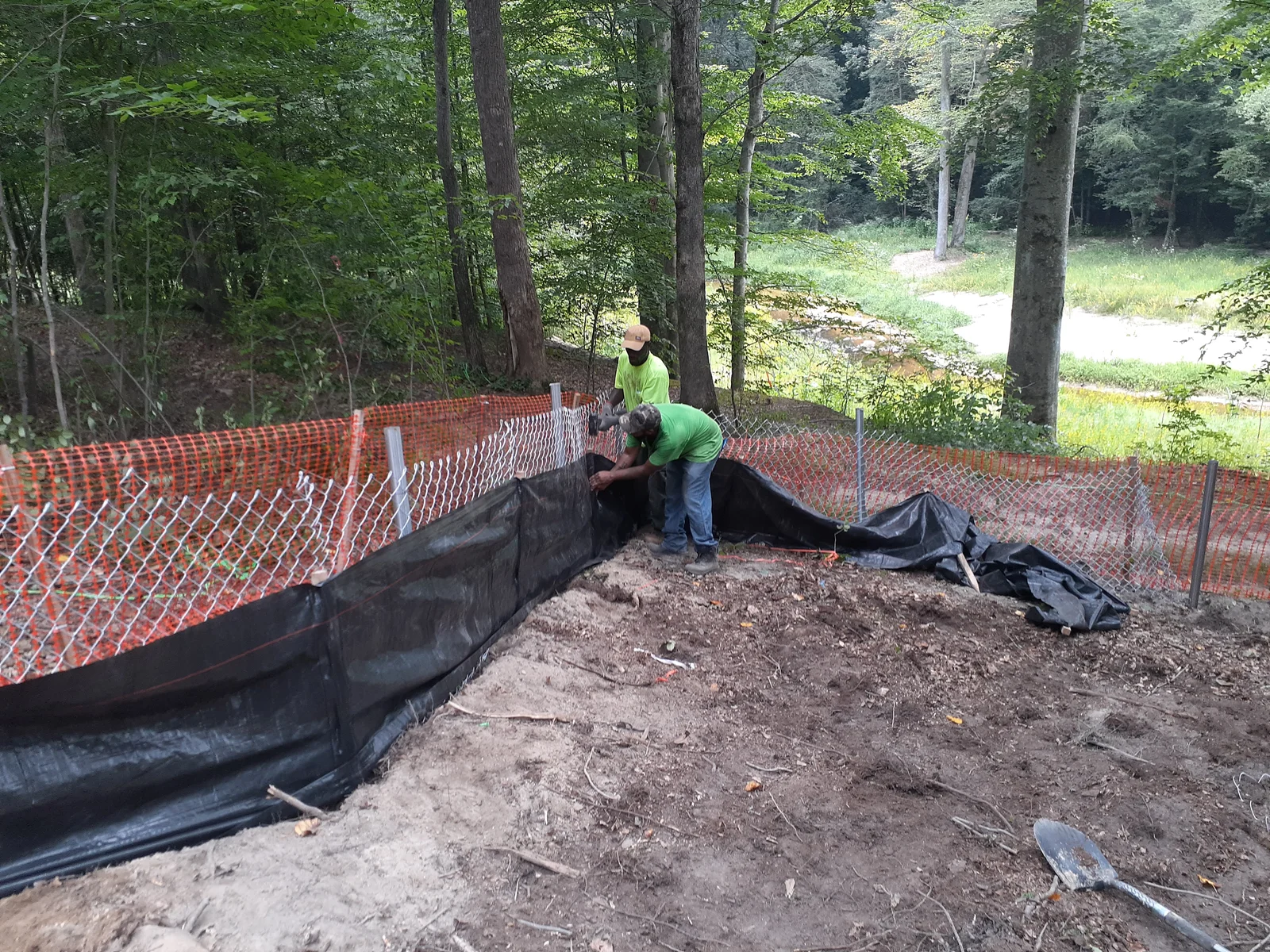
A SWPPP is the working plan for keeping sediment and other pollutants out of runoff during construction. When the general permit applies, prepare it before submitting a required registration or before work begins for qualifying small detached-home construction. The operator uses it to document the items below.
- A project description and site map showing the clearing limits, drainage paths, nearby waters, entrances, and control locations.
- The applicable erosion and sediment control plan and stormwater management plan or accepted agreement, with measures such as a stabilized entrance, silt fence, and temporary and final stabilization where specified. The approved sequence sets when to install controls before broader clearing.
- Procedures for fuel storage, spill response, waste handling, and concrete washout, where applicable.
- Permit and coverage documents where applicable, plus inspection, maintenance, and corrective-action records kept as the job progresses. Virginia CGP requirements for a SWPPP
How crossing one acre can change the price
Published government fee examples as of November 2026. Your project category and the applicable local schedule determine the actual fee.
| Permit or project category | Published fee example |
|---|---|
| Standard construction stormwater coverage | $4,100 for one to less than five disturbed acres under the standard fee category. The next standard tier, five to less than ten disturbed acres, is $5,100. Virginia fee schedule · Richmond fee ordinance |
| Henrico detached single-family home | Henrico lists a $209 CGP issuance fee for its single-family-home category at one to less than five disturbed acres. A subdivision-wide application is a different category. Henrico CGP fee tables |
| Chesterfield general land-disturbance application | Chesterfield lists $290 for its under-one-acre category outside a common plan and $4,100 for one to less than five acres under the standard category, including the applicable state share. Its single-family residential process is separate. Chesterfield general permit fee schedule |
| Hanover single-family land disturbance | Hanover lists $168 for the single-family agreement-in-lieu category. Its separate residential category labeled greater than one acre is $667 plus $333 per acre, with the per-acre charge capped at 10 acres. Confirm the applicable county fee with Hanover, especially at exactly one acre. Hanover FY2027 fee schedule |
An application fee is only one part of the budget. Ask for separate pricing for survey and plan preparation, government fees and any ongoing permit fees, any required surety, erosion-control installation and maintenance, inspections, and final stabilization. On a wooded septic lot, also confirm which areas will be grubbed, where stumps will stay, and who will price any grinding. Those decisions can change the scope even when the acreage stays the same.
Get a clearing quote based on your site plan
If you’re building in Richmond, Henrico, Chesterfield, Hanover, Prince George, or nearby, send D&G Multi Services LLC your property address, site plan, and septic layout. We can quote clearing, grubbing, and erosion controls by scope and coordinate the work around the septic plan. Call 804-799-8761 or request a quote.
Land clearing services · Septic system installation · Erosion control services