 Post by
Removing an unused pool can give you space for a lawn, landscaping, or a different use of your property. The first decision is how much of the pool needs to come out.
Full pool removal takes out the entire pool shell. Partial removal leaves an approved portion underground before the area is filled and restored. People sometimes call partial removal a “half removal,” but that does not describe an exact percentage or depth.
For homeowners around Richmond, Chesterfield, Henrico, Mechanicsville, and Prince George, the right approach depends on the pool’s construction, local approval, access, and what you want to do with the ground afterward. If you’re planning grading, drainage, or site restoration after a pool removal, see our Richmond sitework guide.
Full and partial removal compared
| Question | Partial removal | Full removal |
|---|---|---|
| What happens to the shell | An approved portion remains underground. | The entire pool shell is removed. |
| Main planning concern | Whether the locality accepts the proposed abandonment and future use. | Removal limits, hauling, replacement fill, and the intended use. |
| Future construction | Needs project-specific review before selecting this option. | Still needs suitable ground conditions and any required engineering and approvals. |
| Cost and schedule | May reduce demolition and hauling, depending on the approved scope. | Removing more material can increase demolition, hauling, and disposal. |
How partial pool removal works
Where approved, partial removal can include demolishing coping and upper portions of a concrete pool, providing drainage through the remaining floor, and filling the cavity with suitable material. The approved plan determines what can remain, how drainage is provided, and how the fill is placed and compacted. [3, 4]
This option is worth discussing when your goal is a lawn or landscaping. Before choosing it, identify any future patio, garage, addition, or replacement pool. Leaving buried concrete can affect the design and cost of later excavation.
A pool fill-in needs more planning than simply pushing debris into the opening. Confirm required inspections before the work is covered.
How full pool removal works
Complete removal means removing the entire pool shell and hauling the removed material away. The excavation is then backfilled and finished for the agreed use.
Ask the estimate to identify the surrounding deck, equipment pad, steps, fencing, pumps, heaters, and underground lines individually. Those items are not automatically included just because an estimate says “full removal.” Electrical, plumbing, and gas work also need a defined scope.
Complete removal eliminates the remaining shell as an underground obstruction. It does not automatically make the former pool area ready for a building foundation.
Pool construction changes the removal plan
Concrete and gunite pools
These pools have rigid cement-based shells, often with reinforcing steel. Compare an approved partial abandonment with complete shell removal. Include concrete decking, coping, attached spas, and other connected features when defining the demolition limits.
Vinyl liner pools
An in-ground vinyl pool has a liner supported by structural walls. The liner, wall system, pool base, and surrounding hardscape need separate consideration. Removing the liner alone does not remove the pool structure.
Fiberglass pools
A fiberglass pool uses a prefabricated molded shell. Establish how the shell and any surrounding concrete will be removed, what equipment can reach the yard, and how the resulting excavation will be filled.
Above ground pools
Above ground pools commonly use assembled walls or framing with a liner. Define removal of the pool, accessories, equipment, and any separate deck or footings. Yard restoration depends on what remains after dismantling.
Pool material descriptions: [5].
Permits drainage and compaction
Check with the city or county building department before starting. Virginia’s building code generally requires permits for demolition and regulated utility alterations, with specified exemptions. Chesterfield also states that permit and inspection requirements depend on the scope. [1, 2]
The project review should address utility disconnections, pool water discharge, drainage, fill material, compaction, and inspection timing. Requirements published by another Virginia locality should not be treated as your property’s specifications.
If you plan to build over the former pool, discuss that before demolition. Engineering, soil testing, a compaction report, and separate construction approvals may be needed. Keep the permit, inspection records, photographs, and any testing reports with your property records. [3, 4]
What affects pool removal cost and timing
A useful price starts with the actual pool and access route. Size, depth, material, nearby structures, equipment access, disposal, imported fill, drainage work, and the requested finish all affect the estimate.
Compare written scopes before comparing totals. A proposal that leaves a deck or buried shell has a different scope from one that removes them. Ask for separate pricing for optional work.
The schedule also depends on approvals, utility work, inspections, weather, hauling, and fill availability. A fixed savings percentage or a universal number of days can misrepresent the work your property needs.
What to identify in your estimate
- Pool type, approximate dimensions, and removal method.
- Shell, decking, equipment, fencing, and utility removal limits.
- Demolition labor, equipment, hauling, and disposal.
- Fill material, delivery, placement, and compaction.
- Drainage, grading, and surface restoration.
- Permits, inspections, testing, exclusions, and allowances.
Common pool removal questions
Can I put grass where the pool was
A lawn can be the planned finish. Include suitable backfill, final grading, topsoil, and the chosen seeding or sod work in the proposal.
Which method is better if I might build later
Tell the contractor and building department about that plan first. Complete removal may simplify later excavation, but future construction still depends on engineering, ground conditions, and approval.
Can all demolition debris stay underground
Do not assume so. The approved removal or abandonment plan determines what may remain and what must be hauled away.
Request a pool removal estimate
D&G Multi Services LLC provides pool demolition, debris hauling, grading, and site restoration. Send your project address, pool type, approximate size, photos, and a view of the equipment access route. Tell us whether you want lawn restoration or have future construction in mind.
Call 804-799-8761 or request a pool removal estimate. We review the location, access, scope, and desired finish before preparing a proposal.
See our pool demolition services
Pool removal project in Mechanicsville
Before removal, demolition in progress, and the restored yard from the same Mechanicsville project.
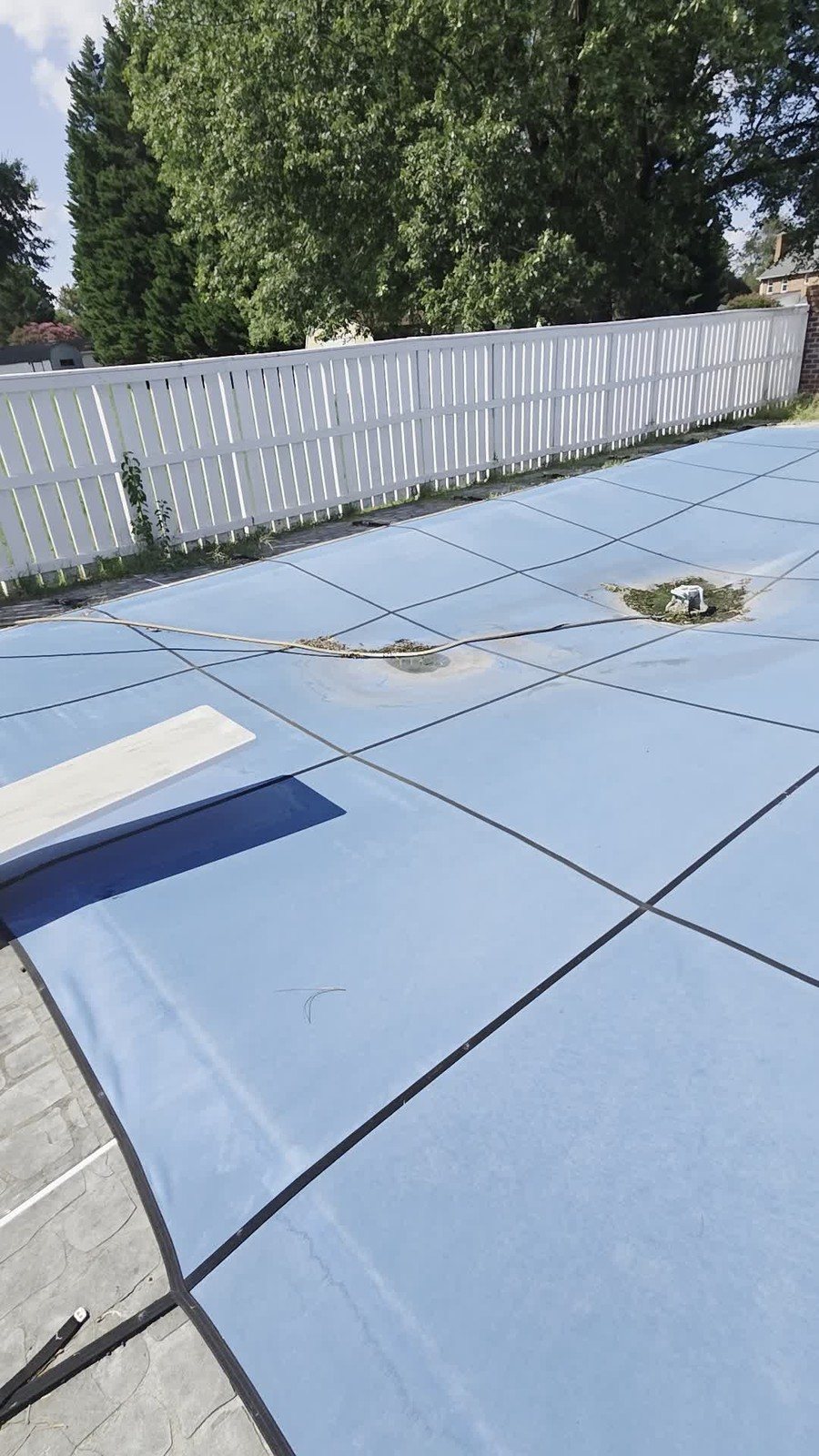
Covered pool and diving board before removal in Mechanicsville, Virginia. Still from the original job video.
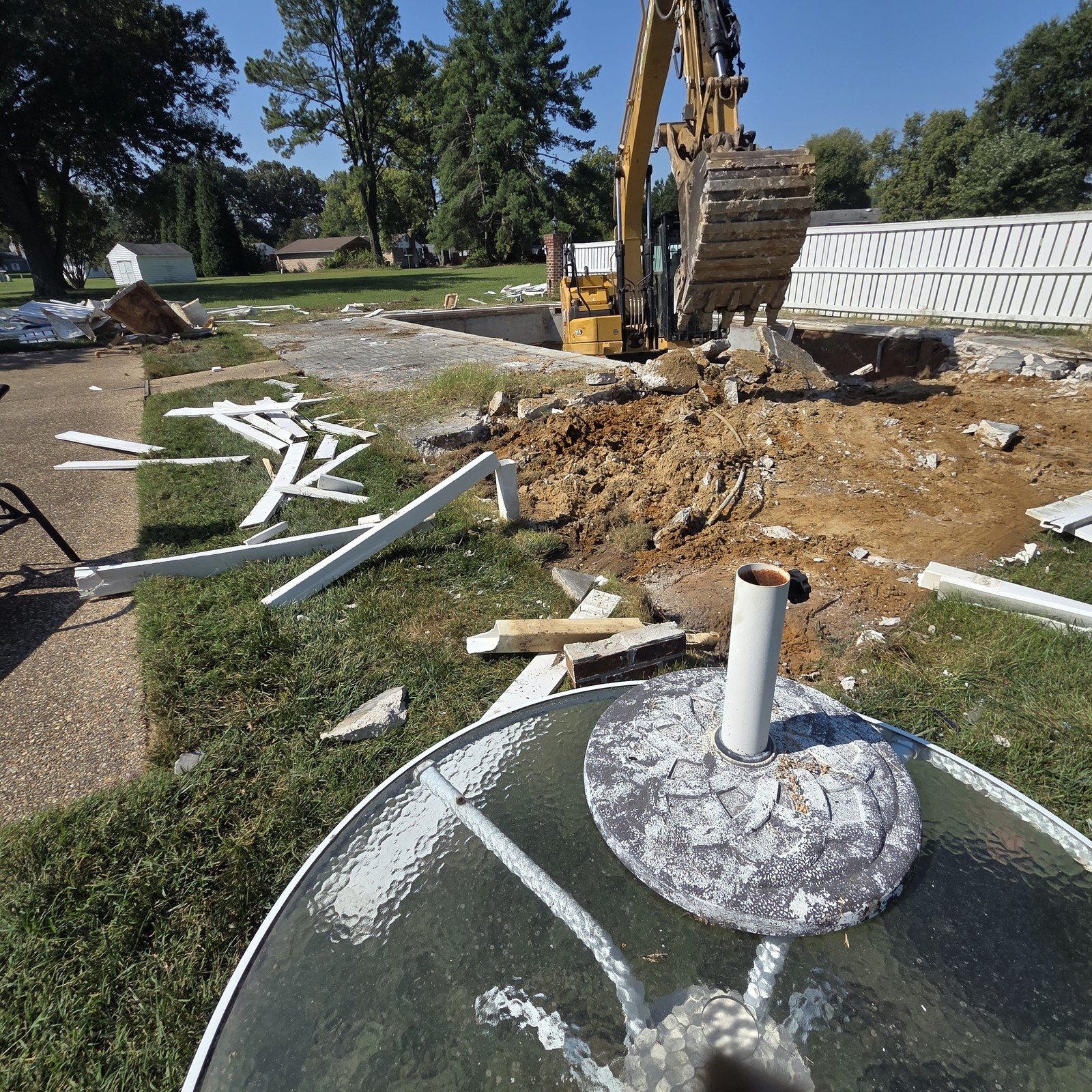
Pool demolition in progress in Mechanicsville, Virginia, with an excavator, broken concrete, and removed fence sections.
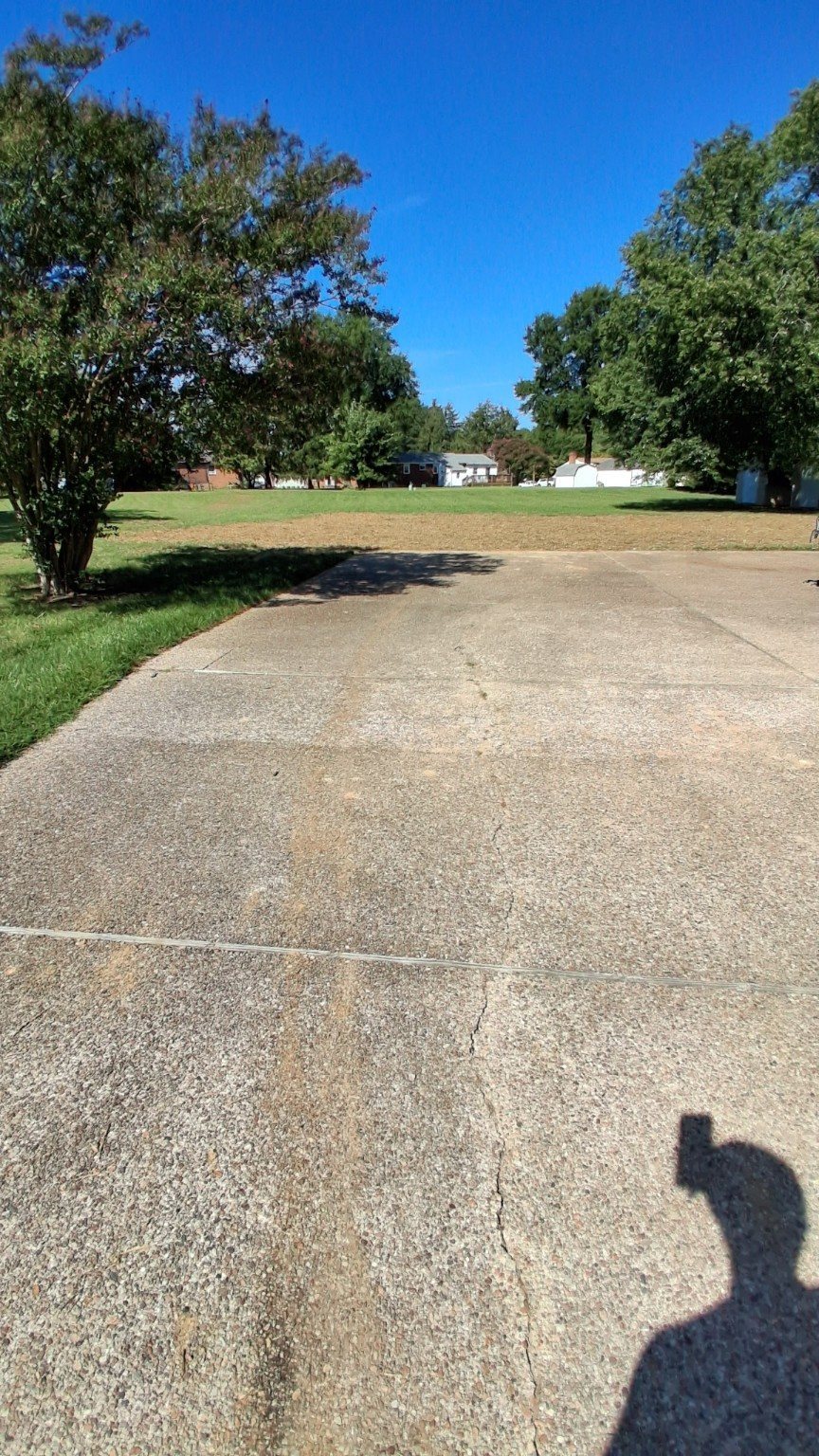
Yard after pool removal and restoration in Mechanicsville, Virginia.
Pool demolition and grading in progress
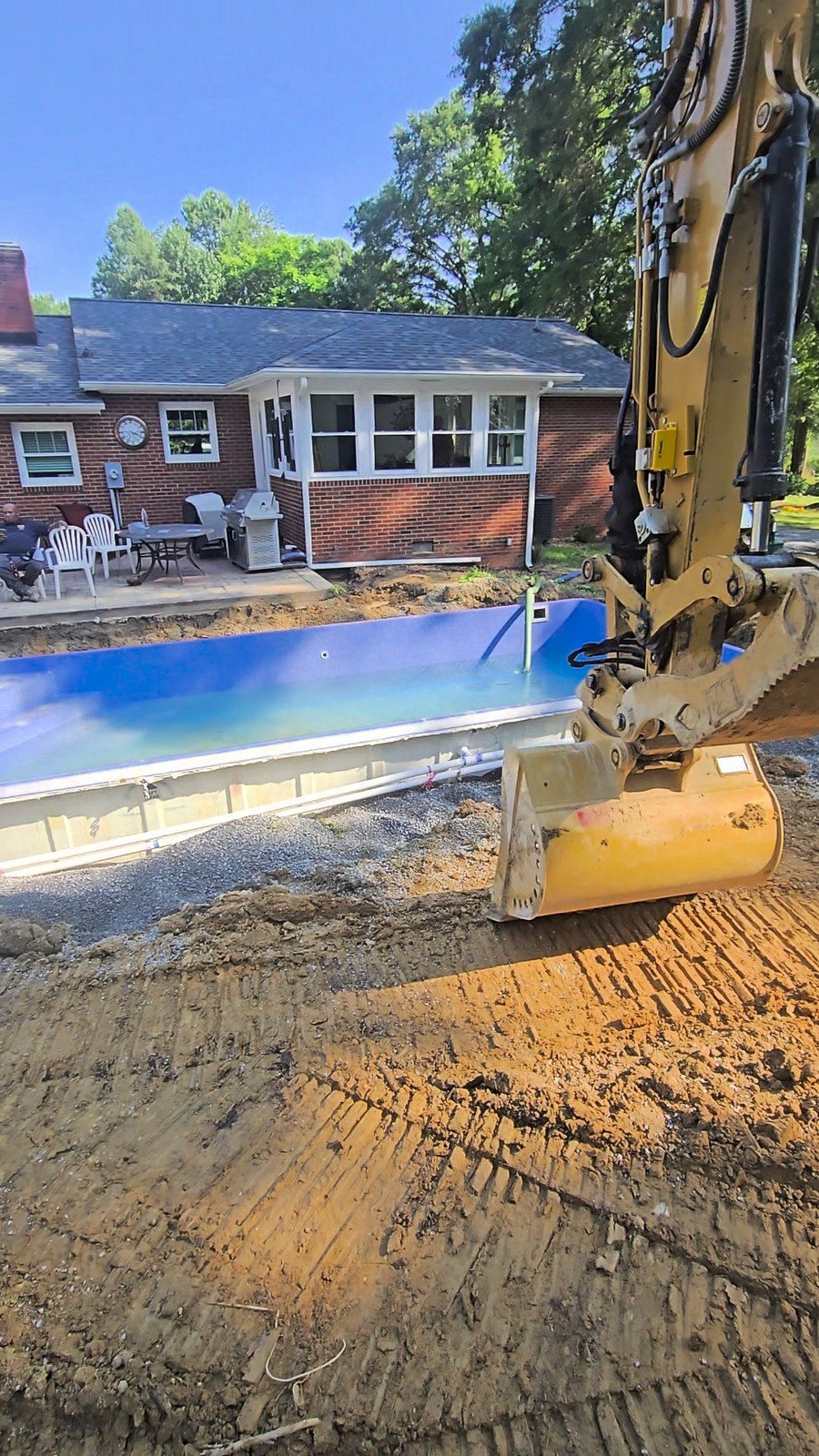
Pool removal work in Henrico, Virginia, July 2025. Still from the job video.
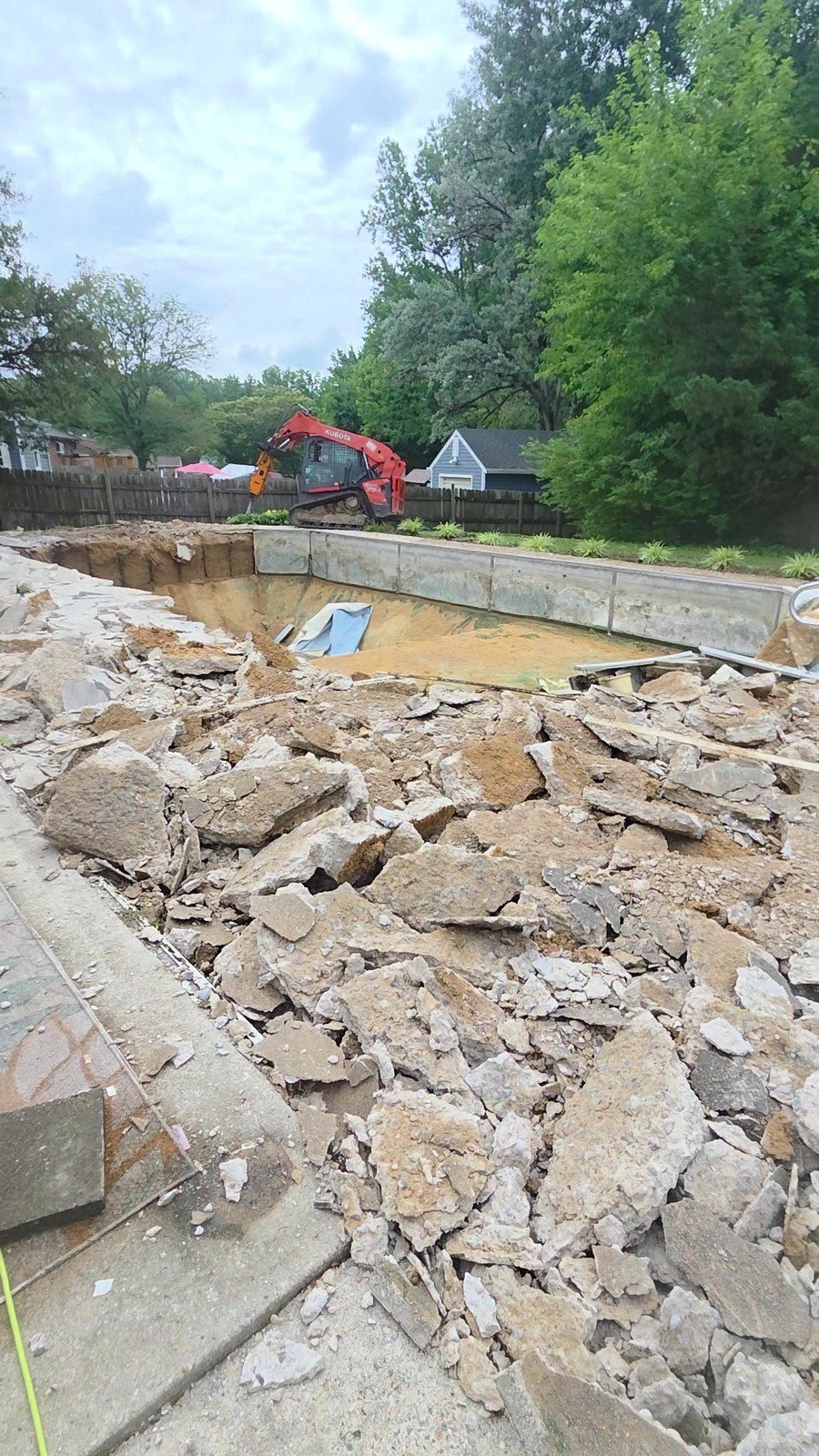
Pool demolition in progress, June 2026. Still from the job video.
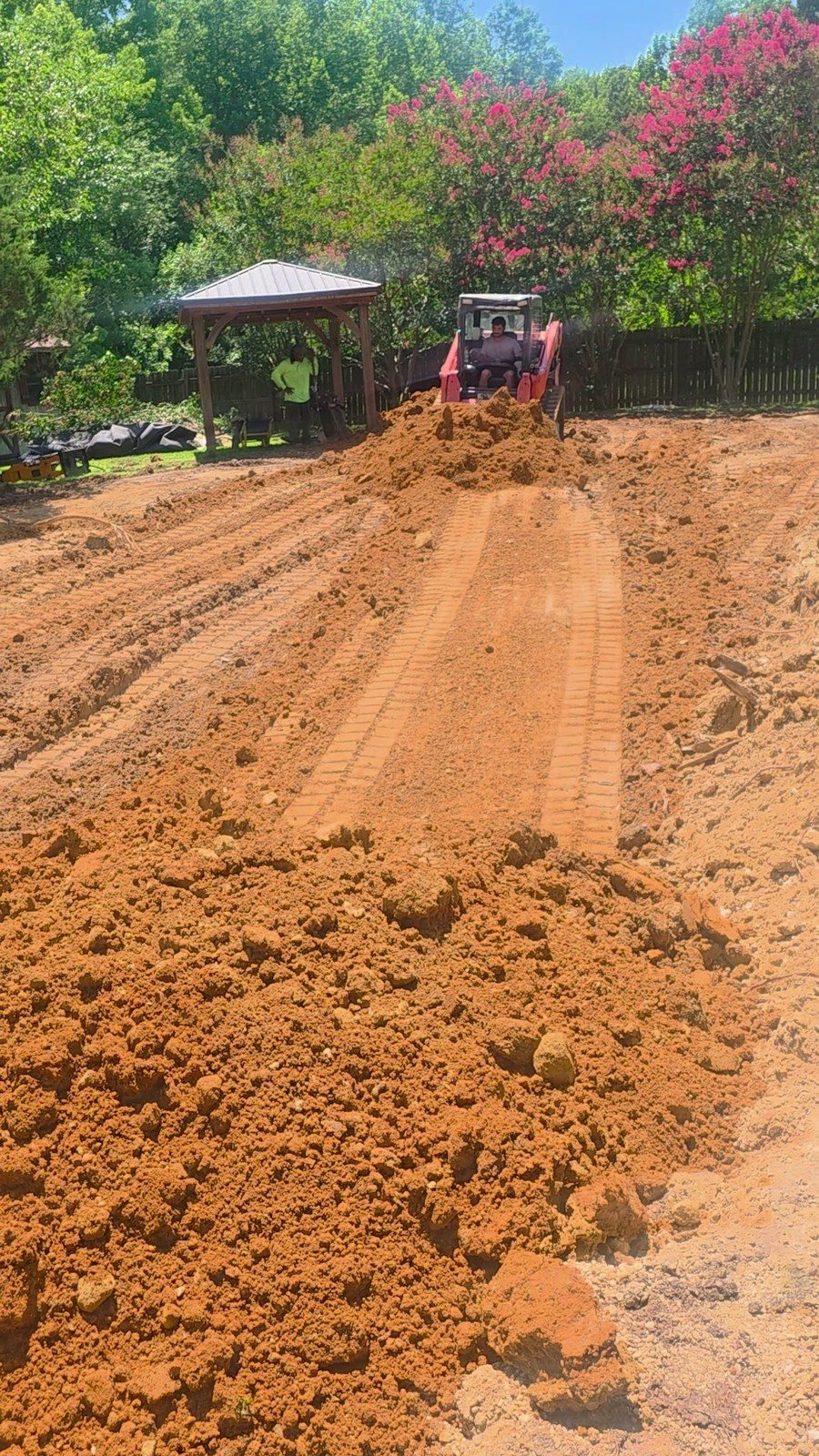
Grading over the former pool area, June 2026. Still from the job video.
Sources and local requirements
- Virginia Administrative Code 13VAC5-63-80
- Chesterfield County Residential Permits and Inspections Processes
- City of Salem Demolition Requirements
- Franklin Southampton Demolition of Gunite Swimming Pool or Spa
- New York City Department of Buildings Outdoor Swimming Pool Types
Virginia locality guidance is used for general planning context. Each project follows the requirements approved for its own location. New York City material descriptions support the pool construction section only.