
D & G Multi Services LLC
Excavation, Grading & Land Clearing in Hanover, VA
D & G Multi Services LLC reviews excavation, grading, demolition, hauling, clearing and drainage requests for Hanover projects. A building area, access route or property improvement may involve several stages of earthwork. We can review clearing, material movement and the finished surface together, defining what you want us to complete now and what belongs in a later phase. We review coverage and mobilization by address and scope.
Land clearing and stump removal boundaries
For land clearing, first distinguish the area you want to open from trees, fences and other features to retain. Identify whether the scope includes stump removal, debris removal and grading after clearing. Describe these separate tasks together when they form part of the same project. Photos and a marked sketch help explain the intended boundaries before we review equipment access and the work sequence.
Excavation, grading and driveway preparation
Excavation and rough grading establish the working area; rough and finish grading need a defined surface handoff. Tell us whether the goal is site preparation, driveway installation, a culvert project or restoration after other work. Where plans or elevations exist, include them. The proposed scope should identify material removal, imported material, hauling, erosion control and the agreed finishing work.
Drainage, culverts and stormwater construction
For drainage installation, show both the problem area and the surrounding ground. Photos during or after rain can help explain ponding, runoff paths and downspout discharge. Include any available survey, drainage plan or prior repair information. A stormwater construction request should identify the feature, construction limits and applicable plans, and assign design and ongoing maintenance responsibilities separately. The proposed outlet and affected areas need review before defining the construction.
Connect demolition with debris removal and restoration
If demolition is part of the project, specify the structure or feature to remove and what the area should look like afterward. Clarify whether the requested scope includes foundations, debris hauling, disposal, backfill and final grading. Identify utilities, nearby structures and access restrictions that need review. Before scheduling work, assign permit, inspection and other responsibilities, and identify unresolved conditions in the proposal.
Include septic, water and sewer work in the site plan
Projects involving conventional or alternative septic installation or water and sewer work need a defined scope alongside the other earthwork. Send available plans and describe the requested installation or connection work. Also, assign responsibilities for design, existing utilities, approvals, inspections and work by others. Coordinate those requirements with clearing, excavation and restoration before settling the sequence.
Hydroseeding, sod and restoration in the return phase
Define site restoration separately from initial earthwork. Topsoil, seed and straw, hydroseeding and sod installation are different finishes. Mark the receiving areas and identify who prepares the soil, applies the finish, waters it and handles follow-up care, especially if other trades will cross the ground before the return visit.
Write a useful handoff for each phase
For project coordination, identify the phases and handoffs you want us to coordinate. A phased request becomes easier to review when each phase has its own finish condition. “Prepare the site now and return later” leaves important questions open: what will be usable in between, which areas must stay accessible, and what work remains when the next contractor starts?
- The first handoff
- Describe the area released to the next trade and the agreed ground condition. Identify clearing, excavation, soil movement or rough grading requested at this stage.
- The period between phases
- Show access that must remain open, material left in stockpiles and improvements that need protection. Identify who handles temporary upkeep and any additional work requested after other trades have used the site.
- The return scope
- Define what needs to happen before final grading or restoration can begin. Identify the requested surface, areas disturbed by later work, materials and establishment-care responsibilities.
Available plans, marked photographs and the next contractor’s requirements can support those descriptions. If you have not yet defined a later phase, keep it as a separate review item. Then define its scope before adding it to the initial work. A clear handoff helps an owner compare proposals for the same stage of work without treating a rough-graded surface and completed restoration as equivalent.
Grading, access improvements and sitework in Mechanicsville
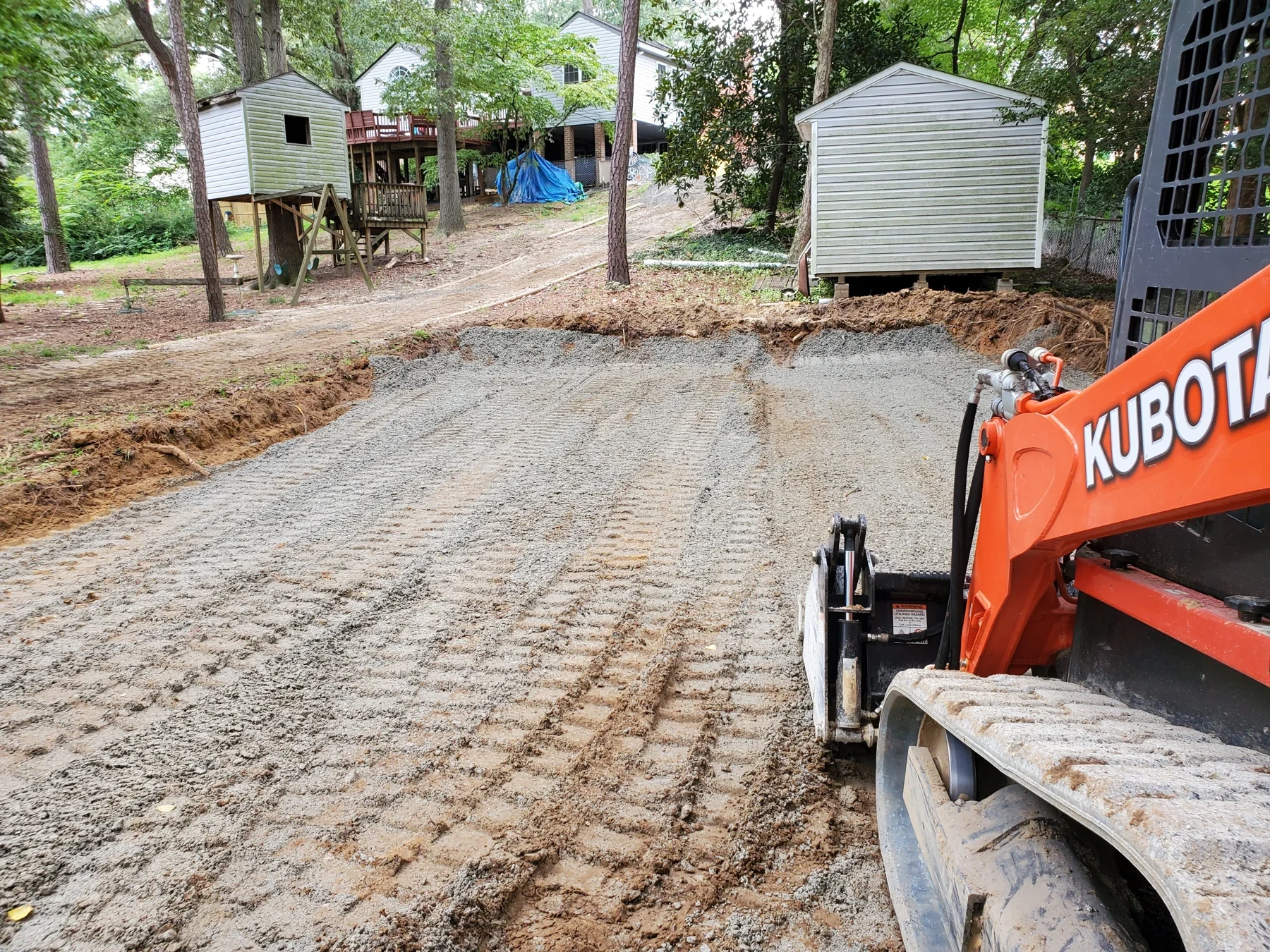
Planning a graded work area or property access improvement in Mechanicsville? D & G Multi Services LLC reviews the ground preparation, material movement and finished surface together. The Mechanicsville aggregate-grading photograph on this page shows work in progress.
A useful grading proposal starts with the intended use, the preparation area and the project’s specified elevations or finish. If you need aggregate, first define its type, placement limits, thickness and preparation requirements. Identify who supplies material, where trucks can unload and which existing surfaces need protection. These details help distinguish spreading material from a broader excavation and grading scope.
We can also review land clearing, stump removal, excavation, demolition, hauling, drainage repairs and culvert work. Where the project includes septic installation, utility earthwork or erosion controls, share the relevant plans and identify how those operations connect to the ground work. You can also request restoration for disturbed areas. The proposal should state the final surface and assign establishment care.
For your Mechanicsville request, send the address, photos, approximate work limits and available drawings. Explain whether the surface will support vehicles, construction activity or another use. Call (804) 799-8761 or request a sitework proposal; we review coverage, mobilization and scheduling for the actual project.
Questions about your Hanover project
Can you split preparation and finishing into separate phases?
We can discuss phasing when later construction or other contractors affect the work. Define the condition required at each handoff, access between phases and the later finish. We then review scheduling and mobilization from the actual scope and address.
What should a drainage request show?
Show where water starts, where it collects and the surrounding ground, along with any proposed outlet. Include photos during or after rain, available plans and prior repair information. A drainage method should follow the site review.
How do I confirm coverage for a Hanover project?
Send the exact property address and the scope you want completed. D & G Multi Services reviews travel, equipment access and mobilization by project. We review coverage, project fit and start dates for the actual address and requested work.
Request an itemized proposal for your Hanover project
For a Hanover project, describe the preparation and finishing work, any separate phases and the condition required for the next contractor. Include the exact property address. Photos, plans and measurements are optional for an initial residential request. Call (804) 799-8761 or request an itemized proposal. For commercial bids, include the current plans and bid deadline when available.